Medical Assisting Program - Diploma
The Medical Assisting Diploma Program at Remington College is designed to help students prepare for entry-level roles in healthcare with a focus on both administrative and clinical skills.*
Program Highlights:
- Complete your diploma in as few as 9 months.*
- Study from industry- experienced instructors.
- Curriculum includes clinical procedures, billing, and pharmacology.
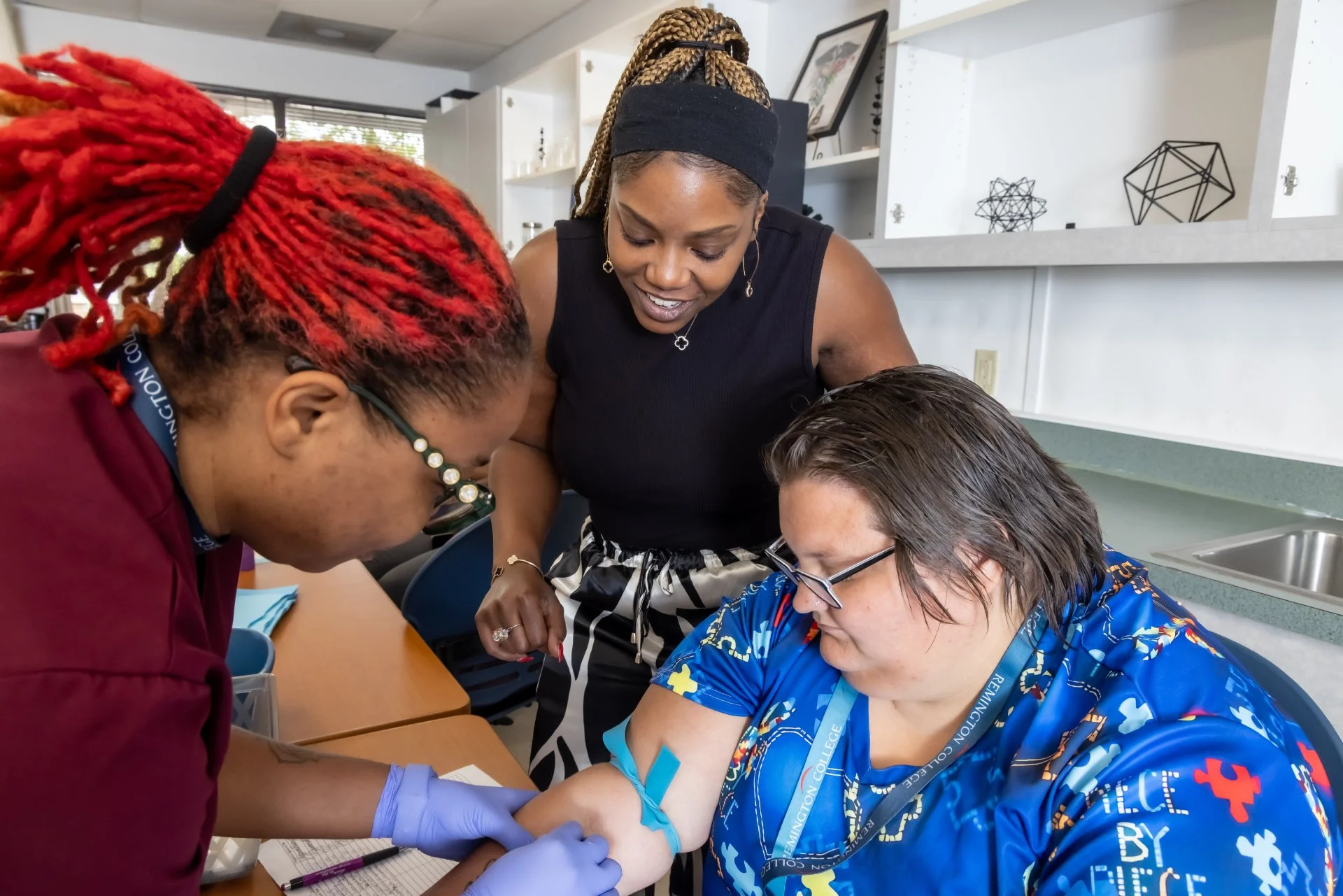
- Combines classroom learning with real-world, hands-on training in the lab.
*Program completion time may vary based on individual performance/circumstances. Employment not guaranteed for students or graduates. State certification/licensure may be required.




My purpose of choosing Remington College for my education was the short nine-month period. I fit Remington College into my schedule. Because of the night classes, you go for only 2.5 hours while you can work during the day full time and still come to school at night. The quality of education here at Remington College is top-notch. I prior went to a four-year university where I didn't feel quite at home. Here, I felt like I was coming home to my peers and teachers. I would 100% recommend Remington College to others because the experience is 100% hands-on.